Tuesday, January 25, 2022

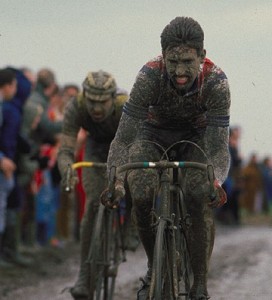
T.S. Eliot needed a fat bike


 T.S. Eliot wrote, "April is the cruellest month." 

(Yes, I had to look it up to be sure.) 

T.S. Eliot was wrong. It's February. 

If you ride bikes in South Dakota, it's always February. The bikes are hanging in the garage or sitting on the trainer. The trainer simply mocks your insolence. 

March offers some hope with occassional rideable days. 

April is still a dream. 

Damn you T.S. Eliot. 

Tuesday, January 18, 2022

Three things to check before the family ski trip

We’re coming into the prime ski trip season.

A lot of families use Spring Break, President’s Day weekend and other school holidays to make a quick trip to Colorado or similar ski meccas.  

In the chaos of daily life – not to mention prepping for a trip – the state of your gear can get stuffed into the background. Taking a minute now can save you a load of aggravation and money on the mountain. 

Peter Oien, manager and all-round gear guru at our Minnesota Avenue store, has some advice. 

There are three areas to consider. The gear. The travel. The body.

Tuesday, January 11, 2022

Pain and suffering are not the same thing

Suffering is part of cycling.

Pain is not. 

Which is not to say that there aren't painful moments. There are inherent dangers that we don't need to go into, experiences that we've all had. 


But you should never be in pain on the bike. At least ideally. Most pain we experience - in the saddle, knees, shoulders, hands, back, neck, feet - is evidence of something that can be fixed or made better. 

It's your body saying there's something not right about how it is lined up with bike. It's your body asking for help. 

The reality is that you're taking an incredibly complex, beautiful and malleable being and hooking it to a beautifully simple but un-malleable machine. You can get on about any bike and make it go. Your body will adapt to that moment.

But if the points on the bike - the pedals, saddle and handlebars - aren't where they are supposed to be, it might hurt, especially if you do it long enough. That's where pain comes in. Your body is asking you to stop.

That possibility of pain is minimized by a professional bike fit. Thankfully, you can get that at Spoke-n-Sport. We're the only ReTul certified fitter in the area. You can learn more about that here. 


Suffering is a different deal.

That's your brain demanding that you stop.

Not everybody who gets on a bike suffers. Nor should they. There is nothing better than a casual family bike ride through the park or to the coffee shop. 

But if you start riding for any distance or purpose, there will come a time, well.... you're going to suffer.

That's mental, and for a different day. 

There's a phrase in bike racing, affectionately known as Rule No. 5. It's not for everybody. There are plenty of people who will say it's stupid racing stuff. Fair point. But if you want to learn more, you can visit the Velominati. Consider yourself warned.


Tuesday, January 4, 2022

Our snowboarding ambassador Melissa MC

It seems unsophisticated to qualify Melissa MC's snowboarding mission as focused just on women.
To be truthful, she's an ambassador for everyone. 
But she does have some gender-specific insight whether you're headed out to Great Bear for an afternoon with friends or planning a Colorado vacation. 
First off, her last name isn't MC, that would be weird. It's a nickname, short for McCauley and she's a Spoke-n-Sport ambassador. 
You can find her at Great Bear every Thursday from 5 to 9 p.m. for Ladies Night. Stop by to get some tips on gear or moves or just to say howdy. 
And if you happen to be female, Melissa can hook you up with the 605 Lady Shredders, an informal tag for the circle of cool kids she hangs with. 
Not do belabor this gender thing, but Melissa does have some tips when it comes to gear for women.
What works for a petite woman may not work for a tall woman, for example.
"But when items are designed for women, you can immediately tell because you are more comfortable," she says. 
Which is not to say that women can't wear men's gear. It all depends on your body. 
"Gear is there to make you feel comfortable and confident so you want to go skiing or snowboarding."
Spoke-n-Sport has a wide variety of women's clothing, skis, snowboards, boots and bindings in stock. Our expert staff can help you find exactly what works best.
Ladies Night at Great Bear is a great chance to get out whether you're new to the sport or fully confident in your abilities, Melissa says.
"The biggest thing to take away from Ladies Night is that it's meant to be fun," she says. "We want all levels and positive attitudes."

Monday, December 27, 2021

Stay warm and have fun biking in winter


The annual Spoke-n-Sport New Year's Day Ride is coming up this Saturday.

This is the 35th year of the ride. One change is that we're starting from the new Tuthill Park location. We roll at 1 p.m.

Not sure what to wear? This should help....

Fall and winter can offer some of the best riding out of the year.  Nothing beats the serenity you find pedaling your bike with snow gently falling around you.  It’s something everyone should experience.  Not all winter rides are guaranteed to be calming.  Winter conditions can also change drastically so you will need to be prepared for changes in either direction of the thermometer.  This can affect your clothing as well as the mechanical parts of your bike.  With some planning and the right gear it’s more likely you’ll have a great time.  Below is a list of gear and clothing you should have for successful winter trips by bike.  

Clothing Plan

We are going to be talking about clothing in terms of a rider that’s between a commuter and a 1 to 2 hour weekend trail rider.  That’s the biggest market in this area.  If you’re planning on doing Iditabike or Arrowhead 135 this info may just be scratching the surface.  Also, cycling gear is the best for cycling but that doesn’t mean you can’t use running or skiing equipment on the bike.  What you’ll lose out on is longer flaps on the back of jerseys and jackets for when you’re holding your handlebar, longer sleeves for turning or a reinforced crotch for abrasion wear.


What I want everyone to do is lick your finger.  Wave your finger around until it’s dry.  You probably feel some coolness.  What is happening is moisture is evaporating off of your finger.  That process is a cooling process.  Not imagine that at 10 degrees.  If you actually waved your hand around you simulated another risk when riding in cool weather.  That’s the wind.  Although the air temp is the air temp and it’s not going to get any cooler, wind will determine how quickly your body temp will lower.  I’m often reminded of the wine chiller at the liquor store.  I don’t know what those run at for a temp but they work by spinning the bottle and it’s contents in cool water exposing as much of the internal fluids to the coolness of the outside of the bottle and the good conductor of glass between them.  You can chill a bottle in under a minute.


Dangers of Riding in the Winter

Too hot: too much moisture

Too cold:  dead

Breakdowns:  hard to fix things with gloves on.  Gloves off...too cold...die

Crashing:  Dying

Temps:  Too cold die


Know when to stop.  


Ok, so you’re ready to go. But you need to be aware of when you are ready to stop.

Unfortunately this is not always easy to know. Biology conspires against you. One of the really insidious things about cold weather is hypothermia.

It’s not that it sneaks up on you. You will know you are getting cold. You will be shivering. The next thing you know you have your hat off, your jacket unzipped and you think you are too warm. You don’t seem to care about the cold anymore.

The bad part is by that time you may be too far gone to recognise the problem. You need to pay attention to the EARLY warning signs, those in the first two rows below. And watch your riding partners too.

Eat and drink. It takes energy to fight the cold. Don’t go on long treks alone unless you are well prepared.

Systemic Hyperthermia

Core Temp

Degree of Hypothermia

Signs and Symptoms

Cardiorespiratory Response

Level of Consciousness

95 F

Mild

Shivering, Foot Stamping


Withdrawn

90 F

Mild

Loss of Coordination


Confused

85 F

Moderate

Lethargy

Slow Pulse

Sleepy

80 F

Severe

Coma

Weak Pulse, Arrthymthmias, Slow respirations

Irrational

78 F

Severe

Apparent Death

Ventricular Fibrillation, Cardiac Arrest

Unconscious


Make a Plan

Plan your gear.  Create an excel file that you can log your clothing and riding gear.  Add to it on every ride and use it as a gauge for planning future rides.  If you do other activities outdoors use it for that as well.  Here are a couple things to keep track of:  Date, Temp, Time of Day, Wind, Forecast (sun / no sun), Distance, Head, body, legs, feet, hands.  How did I feel


Try on your gear before you go.  Don’t just stand in front of a mirror either.  Put on your gear and jump on your bike.  Is blood flow restricted anywhere?  Are areas of skin exposed?  Lower back?  Ankles?  Remember that your spring coat may be a great windproof piece but will it fit over your baselayer?  As you add more layers your arms may be tighter in the sleeves which can cut off some circulation.  We’ll talk about this more with shoes and helmets.


Manage Your Effort

Layering is the most common way to dress when riding in cooler weather.  It does have its disadvantages.  If you’re riding trails or varying terrain your effort is going to increase and decrease as you ride.  Taking off and adding layers is time consuming.  Weather conditions change drastically in the mornings and evenings as the sun drops.  Carrying all that extra gear may prove difficult.  Managing your cycling effort may be an option to manage your comfort in the cold weather.  Or maybe neither layering or managing your effort are the best but using both methods together will enable you to stay comfortable on your ride.


Baselayers

Sweating is a cooling process.  It removes heat from our body as it evaporates.  So it is imperative that we reduce this as much as possible.  We do this with our baselayers.  A base layer is a fabric that is going to be worn against your skin.  It will pull moisture away from your body so you don’t get cold.  Imagine putting on a wet cotton t’shirt when it’s 20 degrees out. You’ll want to avoid cotton.  My favorite is a wool polyester blend.  The most important place to have this is your upper body.  It will pull the moisture away via capillary action.  If it has a bit of spandex in it, it will conform to your body as you move.  


Mid Layer

This is where your clothing guide is going to come into play.  Your insulating layer can be as thick as a down comforter (please no) or as light as a long sleeve jersey.  This may also be your outside layer if it’s cool enough out.  It really depends on your conditions.  One of the best options is going to be using the natural properties of wool to stay warm.  Wool can be a lot more expensive and certainly doesn’t last as long as some of the other fleeces or micro fleeces that are on the market.  A key to this layer is its ability for moisture to travel through it.  You don’t want to wear something waterproof as mid layer.  This layer can be long sleeve or just a vest.


Outer Layer

Breathability is key with this layer.  Waterproofness will depend on the conditions.  If it’s sloppy out or raining, you may need waterproofing.  Water vapor coming from inside your personal biome needs to evaporate and move through this layer.  Water vapor is a smaller molecule than drops of water on the surface.  Which allows for the fabric to be waterproof in one direction (water drops) and breathable in the other direction (smaller vapor molecules).  Effectiveness of a breathable waterproof jacket can change as the jacket gets more wet on the outside or as the temps drop and moisture on the inside freezes when it hits the air.  This restricts its breathability.  When the temps drop there is less chance for rain and an increased chance of snow.  Having something that is windproof but can still breath from the inside will be beneficial.  Be conscious of outer layers that have venting options.  Pit zips or vents in pockets that will allow you to “dump” a lot of heat if you notice you’re over heating or know you have an increased pedaling effort coming up (aka a hill).


Headware

In fall and spring it’s easy to slip a wool cap underneath your helmet to keep you warm. There are even thin windproof caps you can wear.  As it gets colder consider a helmet that has extra insulation for warmth and even vents that can be opened and closed to manage heat / moisture.  Be careful of having too much between your helmet and your head.  These can create additional pressure points.  That pressure can ruin a ride.  Pressure can also be increases as you lean forward and tilt your head back.  Since most winter riding helmets are made from ski helmet molds, there is often a lot of helmet material on the back of the helmet.  As you tilt your head back you can create a pressure point at the neck.  The risk is elevated if you have a coat that has a hood or maybe even a hidden hood or you’re wearing a neck gaiter or balaclava.  Consider a helmet that has goggles that integrate into the fit. It seems eye protection is hit and miss.  Some insist on it.  Some don’t.  


Face Covering

Balaclava or a neck gaiter can help cover the face.  Something to keep you covered on the coldest of days.  The simplicity of the neck gaiter make it easy to pack.  It’s a tube of fabric that can be pulled up under the helmet or just worn around the neck as the temps drop.  They are thin and fairly easy to breathe through.  When choosing something for your face consider the helmet / goggles and other accessories you’ll be wearing.


Hands

Gloves are obviously a covering that’s needed for winter riding.  Keeping warm in really cold temps can be a challenge because the thicker the glove the harder it is to use your bikes controls.  Mittens usually prohibit use of controls as well.  Lobster claw gloves (three finger) do provide extra warmth by keeping fingers together to keep them warm.  When in sloopy weather consider a waterproof glove.  Another option is a pogie.  A pogie is an accessory that you attach to your handlebar.  It provides an insulated pocket around your handlebar and controls.  With a pogie you can wear a thinner glove that gives you more “feel” of your controls while keeping your hands very warm.  Some pogies have closures at the top so you can “close” it so falling snow doesn’t enter.  

Footwear and Socks

The most common mistake made with winter cycling footwear is using a cycling shoe that was designed to be comfortable and cool for winter use.  The venting will cause your foot to cool faster as the cool air comes in through the venting.  The second mistake is wearing extra socks within the same shoe.  Added material makes the shoe fit tighter which restricts blood flow and can lead to discomfort or frostbite.  If you are going to be biking a lot in the winter the best option is buying a shoe that is made for winter cycling.  Winter specific shoes usually have measures to help combat the cold regardless of clipless or not and offer the best warmth.  If you are using a traditional cycling shoe look for a good wool sock and or a windproof sock.  There are also booties which are most often neoprene covers that “windproof” your shoes and offer a level of insulation to keep your toes warm.  If you will be riding in deeper snow, you may want to consider gaiters to cover the space between your shoes and your pants or tights.  These will also come in hand if you find yourself doing any amount of hike a bike on powdery trails.


Riding Conditions

As more and more snow falls and gets scooped to the “gutter” of the street, our roads become narrower.  Taking your lane will be even more important in these conditions.  Keep a watchful eye for ice.  When having to navigate an icy road, move forward off of your seat and slide one foot off the pedal and prepare yourself to use your free foot to stabilize you if your bike slides out from under you.  Always take corners carefully.


Maintenance

Whenever you are done riding in the winter, take the time to brush the snow and ice off of your bike.  If you bring your bike indoors consider where that moisture will go as it melts.  Will it run down into your frame and start to rust key parts and components.  What is going to happen to that moisture when you head out for you next ride?  Will it freeze in your cables?  Will it freeze other key internal parts?  Odds are it will.  It may be best to keep your bike outside in the cold or if you can’t do that have a very thorough cleaning process.


With all the chemicals on the roads in the winter there is more maintenance that needs to be done.  Cleaning your bike weekly / monthly will be important.  Consider switching to a wet lube that will offer a little more protection from the snow and ice.


Bike

Fenders

Use front and rear fenders when possible to keep snow and slop off your bike.  In that slop is also the chemicals they use on the roads to melt the snow.  These chemicals can corrode some of the parts on a bike.  The most susceptible part of the bike is the front derailleur and bottom bracket area.  You don’t want moisture leaking into your bottom bracket and ruining your bearings.  You don’t want the pivots of your front derailleur to rust and corrode either (an advantage of 1x systems).  Full wrap fenders are the best option but don’t always work when tires pack up with snow.  Some tires (esp w/ studs) have too much lug to clear full wrap fenders.  There are clip on fenders that are easy to install but don’t have as much coverage.  You trade convenience for protection.

Bags

When taking gear with you in the winter ask if it needs to be waterproof.  Pulling out that dry mid layer may not be a reality if it was in a saddle bag on a sloppy winter day.  If commuting consider a backpack or messenger bag.  With backpacks consider the heat generated by wearing it.  Messenger bags sit lower on the back and tend to get less hot.

Pedals

When setting up your bike think about how cold or heat will conducted through your gear.  For example if you are using a metal pedal it will conduct cold and heat very well.  Meaning that if it’s cold out, your pedals will be cold.  That cold can be transferred to your feet.  It gets a bit colder quicker when you are using clipless pedals in the winter.  The cold will transfer from your metal pedal, to your metal cleat to the metal in your boot / shoe and ultimately to your foot.  Clipless typically means metal.  There are lots of companies that do a composite platform pedal.  Be sure to use your choice of boot and pedal together to figure out your best set up.  Check out the section on footwear to get more clarity.

Tires

Tire selection is going to be determined by the bike and wheels that you are riding.  Even though a specific wheel size may have a multitude of tire width options, frame clearance may limit you.  Front tire is the tire that holds you in a turn.  If you’re going to run one tire that is more aggressive (studs or wider) the front might be the one to replace first.  The back tire is going to be your traction to move you forward.  Too narrow and you’ll spin.  A wider tire with lower pressure usually gives the best traction in the winter.  Tire studs are an option for most tire sizes and they do give you traction on ice.  They are harder to pedal on pavement.  Staying upright on ice is likely more important than speed.  Some studded tires have replaceable studs.  Some do not.  Some companies have offered bike snow chains for better traction.  Continental makes their Winter Contact tire.  It’s a non-studded tire that has a specific winter traction.  Tubeless in winter usually works well.  One concern to consider is in extremely cold weather, you may want to run a tube.  It’s possible for a tubeless set up to burp out some or all the air.  If you have to replace the tube what is the risk to stopping and taking off your gloves to reinstall a tube?  Frostbite?  Just like tires for other temperatures it’s important to consider the casing and how many TPI it has.  Higher thread counts are usually a lighter tire that is more supple.  The suppleness allows it to roll over things much easier.  Things like ice and chunks of hard snow.

Hydration

In the winter, just like the summer, you have to stay hydrated. That’s a challenge.  Keeping your water liquid is also a challenge.  Keeping water flasks or hydro packs close to your body can help keep the water from freezing.  Placing a bottle in a cage or “feed bag” upside down will keep the top of the bottle from freezing since water freezes from the top down.  In colder temps or longer rides these tips may not be an option.  Consider putting a bit of vodka in your water to keep it from freezing.  Not an option for everyone.

Nutrition

Riding in the winter can burn a lot of calories.  Most of those calories may be burned while just trying to get all the gear on and ready for your ride.  Throw something in your chest pocket just in case.  Keep it near your body if you can so it doesn’t freeze.  

Lighting

Not necessarily a cold weather accessory but because of the time of year we deal with cold weather, we’re also dealing with less sunlight.  At the very least keep a charged headlight and taillight handy for when you get caught out later than expected.  If riding in traffic at any time of the day you should use a daytime running light.  Staying visible this time of year is important as seeing a cyclist riding in the snow may not be something that’s expected.

Hydraulic Brakes

This may get a little too nerdy but your hydraulic brakes performance will change with the temperature.  Most For example hydros that use mineral oil will feel a little more sluggish the colder the weather is.  It’s not necessarily the fluid but the seals needed to keep your brakes a closed system.  The Mineral Oil seals stiffen up pretty quick as the temps drop.  If you are riding below -15 degrees C you should consider DOT fluid.  If it’s going to be colder than -30 then use mechanical brakes.

E-Bike Batteries

The battery is the most sensitive component of the eBike. It can lose capacity at low temperatures, which in turn can limit the bike's range. During winter use with temperatures below zero you are advised to remove the battery, store it at room temperature and replace it on the bike shortly before your next journey. When you return, you should ideally store the battery indoors at temperatures between 60° and 70°F. The same applies to charging the battery: the lithium-ion cells should be charged at room temperature.


Sunday, March 22, 2020

Sharpen that Ax

The cycling industry is a great little community.  Across the country there are roughly 5500 independently owned bike stores.  Of those 5500 stores some have multiplied.  This gives us roughly 7500 bike store fronts in the USA.  Pretty amazing if you think about it.  We're not all awesome.  We're not all horrible.  We can be found all over the spectrum with varying degrees of success.  A common question for much of the leadership is, "How do we improve?  How do we sharpen our ax?"

Terry Storch on Leadership:  Your capacity as a leader is directly tied to your ability to change or adapt in the moment.
I've never been comfortable running my business the same from year to year.  Sure, there are things that I don't change but somethings need to change.  Imagine if you owned a typewriter store 20 years ago.  You're probably not selling ribbons and ink anymore.  You might be closed.  Or better yet, you may have evolved your business to continue to be relevant.  Maybe you're a computer store now.
P2 Host:  BikeLAB OKC
10 years ago I was invited by Leslie Cunningham to be a part of a network of retailers.  It's a program under the umbrella of the National Bicycle Dealer Association called P2.  Leslie Cunningham and Dan Mann were the facilitators of the program for several years.  They grew the program to 3 groups with members from coast to coast and as far south as Chile (I wish I was in that group) and as far north as Barrie, Ontario (I'm in that group!!!).  Each group has from 8 to 15 members.  Members are non competing retailers of various sizes.
Our P2 Group (sans Morgan from Bikeland in Barrie, Ont)
We meet twice a year at different member stores.  I hosted my group in Sioux Falls one year ago.  We sat in a meeting room at the Hilton Garden Inn downtown and watched the river rise...and rise.  We watched all sorts of debris float by the window.  It was surreal!  Our last meeting was hosted by Bike Lab OKC (they have a coffee shop IN the bike store!!!!).  Our next meeting will be at Motion Makers in Asheville, NC.  We spend a significant amount of time reviewing the host's physical store along with it's digital imprint. We are constantly sharing our financials with each other but if there's a specific need, then we'll do a deep dive for the host. 
Kent from Motion Makers in Asheville, NC working on his store review.
Think about a group of business owners visiting (judging) the host store.  One year ago I had a handful of some of the best retailers at my store reviewing every square inch of Spoke-n-Sport.  Nerve wracking stress ball of anxiety is maybe how I would describe it.  Is the bathroom clean?  Is all the merchandise priced?  Did someone leave pizza out on a counter?  Is there a typo on our website?  All the above?
Mark from Landry's of Boston completing a SWOT analysis of BikeLAB OKC.
Think about it through a different lens.  Think about a group of COACHES visiting that love this industry so much that they want you to succeed!  They want me to succeed with my team for the sake of cycling in the region.  HOLY COW!  Talk about an opportunity!  A coach doesn't just say, "You need to ride faster!"  A coach gives you the skills and training you need to ride faster.  A coach creates a training plan that will carry you through to success.  Intervals and meal plans along with encouragement and support.  That's just one part of the P2 program.  It's a team of coaches always wanting each member to succeed.  I feel the same way about every member in my P2 group.

Kent sharing some Point of Sale ideas with Brent of Bike Tech Cedar Falls and Tony of BikeLAB OKC.

It doesn't stop there.  There's more!  I've often imagined specialty retailers being very independent...to a fault.  Independence turns every problem into a new frontier.  When turning on a light you don't have to remember the history of Ben Franklin and his kite to know the switch will illuminate your midnight snack run.  The problem has already been solved.  The problems of retailers often consume a lot of time.  We're not accountants or IT professionals yet those are some of the problems we challenge ourselves with every day.  Some of them are as simple as needing more traffic in our stores or an easy way to make signs for merchandise.  Many of our problems have already been solved.  We are problem solvers!  With a group of problem solvers visiting, all you have to do is ask.  I don't even need to wait for a visit.  They are all there waiting at the end of an email address. The solution might not come from one member but from several at once.  It is often a group project with every member having a piece of the puzzle.  What an incredible resource.  We don't always agree on the solution.  You'll see responses like, "No, that will never work."  "You can't do that!".  That's when the fun starts because the problem solver has the data to back up the solution.  I love it when the answer is, "Not only does it work, we've been successfully doing it for X years and we've reduced our expenses XX%". 
Kent and Brent talk shop with Jeremy of BikeLAB OKC.
Our P2 group is just one method we use to sharpen our ax at Spoke-n-Sport.  We have a vested interest in cycling and when we improve, our clients see a benefit.  We don't squeeze profits out by reducing payroll our gauging our customers.  None of that even makes sense.  It's very short sighted.  We are a sustainable business in a tough market at a tough time that still aims to grow a community of cyclists.  Cycling truly is amazing.

Our P2 Group eats lots of tacos! 


Monday, March 16, 2020

Mid South Gravel and Mud Bonanza

To start things off, I just want to say that Bobby, Crystal and their crew along with all the sponsors put on one heck of an event.  Even though there was a national pandemic and a good ole fashioned Oklahoma thunder bumper there were still miles of smiles to be seen in Stillwater, Oklahoma.

If you ever get a chance to be a part of an event like this, just do it.  For example, when Cher comes to town...you just go...regardless if you like her or not.  It's going to be an experience to share with others for a lifetime.  I was going to be in Oklahoma City for some bike industry meetings and I thought why not sign up for Mid South the following weekend.  I got on the waiting list for the 100 mile and the 50 mile race.  I found out a week and a half before the event that I got a space in the 100 mile event (gulp).  Time to start training.  Training was a 30 mile gravel ride one week before the event.  Probably enough. 

The weather for Mid South was looking good.  Partly sunny with 70 degrees and minimal wind.  Just enough to keep the mosquitoes off of you.  I packed the appropriate bike and gear and drove to Oklahoma City for my pre Mid South meetings.  At the last minute I grabbed a long sleeve jersey, bib knickers and gloves just in case. On the way I got a text from a friend asking if I'd seen the weather change.  I hadn't.  Turns out it's a good thing I grabbed the extra gear.  Texted the friend back and asked him to get me a jacket.  It was going to be cold and rainy.  Rain mixed with Oklahoma red clay makes some pretty good chunky peanut better.


Had meetings all week with great people from across the country.  Visited The BikeLab OKC and Wholeshot Coffee.  If you're ever in the area, it's a must see store.  Went mountain biking....err....tried to go mountain biking (another story for another time).  At the end of the week I pointed my car towards Stillwater.

Friday morning was the SRAM / Zipp 20 mile shakedown coffee ride.  It was cold.  just above 40 degrees at 10 am.  Not a bad ride.  Everyone had to be cold at the start.  There was a little wind and no mud.  A little pavement and the rest gravel. This was a good way to confirm what to wear for Saturday as the conditions were to be similar plus rain.  Cold rides make for great coffee.  It was delicious.

Saturday was an early wake up for me as I stayed in a town about 16 miles from the start / finish line.  Up at 6 checking and double checking my gear.  Race start was at 8 am.  My plan was park within a couple hundred yards of the start / finish line and be there at 7:30 to check gear again and air up tires if needed.  The doubt started to creep in on the drive to Stillwater as the rain pounded heavier on the windshield while the early morning sky was illuminated with lightning.  I started to wonder what I was getting myself into.

I found a great parking spot and made my final gear check. My slow roll toward the start line found a lot of cyclists going the opposite way.  Arriving at the start line I found out there was a 30 minute delay due to weather.  One can only assume the promoters were having the same thoughts I was on my drive in.  What are we getting ourselves into.

The streets were clear but the dry spaces under the downtown business awnings and back alley ways were crowded.  The line at the port-a-potty grew.  We watched 8 am come and go.  The lightning stopped and the rain slowed down a bit.  At 8:30 the race announcer requested the racers start lining up.  I took my spot at the back.  I needed 2500 rabbits to chase.  I also knew no one would judge someone leaving from the back of the pack to go get more coffee and a couple more hours of sleep.  Every bone in my body was telling me to not do this race.  Every bone was also telling me it was too cold and wet.  8:36:45 am I rolled across the start line.  The hardest part of the race was over....I was now in a race.


Not sure of the final count but there was a large rolling parade of cyclists bee lining for gravel just outside of Stillwater.  One or maybe two crashes on the pavement in the excitement. Riders were back on their feet in seconds with what looked like damaged pride and no other injuries to speak of.  The start of the gravel was about a mile down the road.  We had heard the conditions were everything from pouring rain to just spitting over night.  By now the rain had picked up again.  Overnight rain probably didn't matter anymore.

We arrived at our first gravel.  To my surprise it wasn't that bad.  It was just standing water (and sometimes rivers of water) on top of hard packed gravel.  It was messy but everyone was rolling through it quickly.

My plan was to ride 10 miles  at a time.  At the 10 mile mark I would stop and force myself to eat, drink and stretch.  I wasn't racing.  I just wanted to cross that finish line on the same day I started.  I came to the first 10 mile stop and I did just that.  I stopped.  It was good.  I was actually feeling a little better than the previous days shakedown coffee ride.  I had chosen my riding gear well. 

When I ride I just fade into my own little world.  Don't feel like talking to anyone.  I let my thoughts wander.  Take in the scenery.  Sometimes people watch.  Or bike watch.  Got to see everything from 1980s mountain bikes to the latest greatest gravel bikes.  The numbers of bikes was not unlike the types of riders.  Tall, short, skinny, big, men, women, young, old, long hair, short hair, 10 year old???  I heard there was a 10 year old out there and that he completed (ROCK ON).  I was surrounded by a large cycling community and even a smaller cycling community suffering through the same part of the course that I was at any given time.  Sometimes it was familiar people sometimes not.  One common cause.  We all wanted to finish.  Everyone encouraging everyone else.  "YIKES" when you see someone make a last second course correction to prevent themselves from hitting the mud.  "YOU GOT IT" when someone grinds through the gears past the walkers.  I even heard a "WOW..PRO MOVE" from a couple on a tandem when I had shifted into my lowest gear; mud and rocks caused my chain to drop to the inside of my cassette (NOT GOOD!).  I had caught it when I heard "THAT" sound.  I quickly back pedaled and got my chain back on track without missing a beat.  So encouraging out there with all those cyclists.  Glad I made the commitment to ride.


The rain stopped around mile 10 or maybe it was mile 15.  The roads still had standing water on some parts.  Small creeks running down the double track in other parts.  I knew the conditions were going to start changing as the water slowly soaked into the red clay.  They did.

I don't know the history but there's a climb at mile 23 that's a long grind.  Many were talking about it.  It was here that mud started to become an issue.  As you would start the climb (16% grade in some spots), you had to balance speed and power.  Too little speed and you would have to apply more power which meant your rear wheel would start to spin and traction would be lost.  I circumvented all the physics and just walked.  I saw maybe one or two pedal up the entire thing.  It was just under half a mile long.  At the top was coffee, Skratch, pickle juice and smores.  I opted for Skratch with a side of coffee.  It was at this point that I got the feeling back in my toes and fingers.  I was starting to warm up.

Conditions started to worsen.  I started paying more and more attention to my line.  Upper body was getting tense from the rough ride and keeping my bike going the right direction.  The ruts underneath the mud would cause my front wheel to veer right or left.  I'd have to react quickly to stay upright.  I've been a mountain biker with good handling skills more days in my life than not which made descending on these roads easy.  Stand up on the pedals and put the weight on the back of the bike while aiming downhill.  Others were doing the same.  Like me, some were doing it by choice.  Others....it was the only option.  Lots of riders were having brake issues.  Mud packed up in their brakes and or brake wires.  Or they had the wrong brake pads which wore out quickly in these conditions.  Their choice was to hold on.


A WATER HOSE!  I suppose it was mile 25 or so we came across a line of cyclists that were hosing down their bikes.  We got in line.  Some hosed down everything from their tires to their drive trains.  Others, a quick shot to the drive train before heading off.  The reality, would it matter in 10 minutes?

At mile 28 there was another really rough muddy stretch.  It was thick enough and rutted enough that I got off and started to walk.  Carrying my bike instead of rolling it made more sense because as it rolled, it collected more and more mud.  In 10 feet I added another 5 maybe 10 lbs of mud to my bike.  I could feel it.  Once out of the mud I started cleaning off the bike.  Got my drive train fairly clean (didn't I just wash this?).  Started pedaling through other cyclists that were doing the same thing.  In the goody bag there was a paint stir stick.  I didn't get one.  I should have.  I kept pedaling.

I've always been pretty good with figuring out problems with a bike by sound.  Describe the sound, when does happen or how often does it happen etc.  I heard a sound and I didn't have to look down to know what it was.  I knew I was potentially done riding.  The crunching snapping grind of metal I heard was the sound of my rear derailleur wrapping around my cassette.  Nooooooooo!  I had already seen dozens of riders carrying their bikes with the slack of their chain hanging lifeless.  Derailleurs dragging on the ground as riders pushed their now useless bikes off the red clay road.

Some friends were waiting for me up the road.  I had two options.  Try and bend things back or quit.  I wasn't ready to quit so I pulled the derailleur out of the rear wheel and straightened it as best as possible.  Best as possible allowed me to use one gear.  It was pretty mangled.  I moved ahead with one gear.  I also had to get rid of a lot of mud on my drivetrain.  I could use my second water bottle to hose it down or risk making it worse by not cleaning it.  I kind of hoped there would be a random water stop down the road. 

It was the right gear.  It was perfect for the flats.  Not too tall of a gear for the climbs.  In the next 25 miles I had only one or two hills that I had to walk.  It's challenge trying to ride a tall gear up a muddy hill.  Too much power and the rear wheel spins.  Too little power and you fall over.  Not that I'd want to do the entire race on a single speed. 

The next 25 miles were just a slow grind to Perkins. The plan was to get there and re-access what to do.  If I could find a derailleur and or a tool to straighten out some things, I could keep going.  Turned out there were no other water stops down the road.  I was out of water and quickly becoming dehydrated. 

As we pulled into Perkins we realized the timing mat was gone.  We didn't have a way to check in.  Then we noticed a lot of the neutral support was packing up and leaving.  When we asked one group if they had parts they said they were already closed and heading down the road.  Shortly after one of the race promoters announced that if we hadn't left yet, there would be no support for us.  The idea of pedaling on back roads at night with a bike that had been compromised made the decision for me.  At mile 53.  I was done.

Would I do it again tomorrow?  Nope.  I think I'd be ready to try it again in a few weeks though.  I learned a ton.  I left for Stillwater  a week before the race which didn't help but when I do it over again these are the things I'll do differently.

  • More water.  I would use a Camelbak.  The hose being next to my mouth would have allowed me to drink more often.  
  • Better clothing.  I would bring more cooler weather clothing options.  A lot of my clothing was ok.  Better clothing would have helped.  For example my booties were slowly allowing mud into them.  By the end of the ride I must have had close to 5 lbs of mud packed between my shoes and my booties.
  • Second pair of gloves.  After the rain stopped I was still wearing rain soaked gloves that were covered in dirt.
  • Salsa Cutthroat!  The Cutty would have been a much better bike to ride.  Much more clearance between the frame and the tires and that 1 x 12 drive train has much fewer moving parts.
  • Different food.  I had a pretty good selection but a peanut butter sandwich would have been awesome.
  • More friends.  Friends are there to push you and for you to push them.  I'm glad I went and I hope I was able to be pushed and also be the pusher.
There were some things I did do right.
  • YBN Chain....get one.  They shift like magic.
  • Giro shoes.  You can't beat them.  Comfy...super comfy.
  • SRAM components!  Love em!
  • DT hubs!  I found many times I rolled faster.  Might be a gravity issue.....I'll say it's those DT hubs.
  • GIRO Clothing!  I love Giro.
  • Friends.

I did my laundry last night to close out the weeks events.  I even cleaned off my bike.  I brought back a ton of red clay.


Feel free to ask questions in the comments.  Registration for Mid South 2021 will open this fall!